Thursday, November 19, 2009

Mr. James


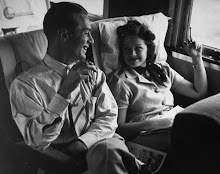
Obviously not my photos. No copyright infringement intended. Also, how's that for handsome in his flyer days?


Waiting to call Mr. James, my stomach was in vicious knots. Once I had told him it was an honor and hung up the phone, I had a high that somebody shouldn’t ever bottle, because there’d be a whole lot more addicts around. I did it. Jesus H. Christ, I just talked to a piece of history.

It began with Mom renting “The Great Escape” from the library when I was 14. We watched one tape, then I had to go to bed, but hated to go, waiting for the conclusion. The movie led to two obsessions – Steve McQueen and POWs. For Steve, I just watched all his movies and vowed to one day stand in his footprints at the Chinese Theatre in LA. For the POWs, I remember waiting anxiously for a battered, used copy of “The Great Escape” by Paul Brickhill to arrive in the mail. I remember a Time-Life style book of POW photos.

One day I found a website about the real history of that mad exercise in nose-thumbing and gentleman and soldier’s duty. I found a few names of men who might still be alive, and then an email with the webmaster and suddenly I had an address. Mr. Bertram Arthur “Jimmy” James of Shropshire, England. Born April 1915, shot down in a Wellington Bomber in 1940. Number 36 (I believe) out of Stalag Luft III’s tunnel “Harry.” Survived the murder of his 50 comrades, sent to Sachsenhausen concentration camp with Harry “Wings” Day and others. Tunneled out of there, but somehow managed to avoid being executed again.

Survived to the rest of the war. Survived until January 18 2008. While people at Chatham were crying over Heath Ledger, I was crying over Mr James.

I sent a letter and got a response. Blue ink, formal handwriting, gentleman old British politeness coming through. So glad I sent a letter, would I like a copy of his book? More letters, and finally I asked if I could call him for an interview. He said yes, of course. Call anytime. Like you could just phone up people like that and it was nothing. Like I had every right to pester him to tell the same damn story over again.

I called. And it meant I was a journalist and absolutely nothing on earth could stop me. I called at Dad’s work, and afterwards went out to lunch with his coworkers/my future friends, Chuck and Betsy the war correspondent. It was the sign that maybe I could be a journalist and talk to people like Mr. James and basically life could be God damn perfect.

**************

I came back from three days in Croatia and there was a letter postmarked “WWII Magazine.” Dear Lucy, we are pleased…etc. They had accepted me. I was 15 years old and once again I was a wunderkind. What the hell else was there to conquer in life? The letter said it would be a while before they published it, and now it’s going on seven years. Somehow I’m not sure it will ever happen, but I check every month at Barnes and Noble, just in case.

A couple more years, a couple more letter exchanges. I almost went out there to England – I made tentative plans. Journalist hooks could have been the 60th anniversary of the Great Escape in 2004. An exhibit on it at the Imperial War Museum… I had gotten my moment with Mr. James, but I wanted more. I wanted to meet this man in person. But what did I think I was going to ask him? I had no profound questions for this guy who had spent the last 60 years being known for the worst war in history. For the act of bravery that lead to 50 comrades being killed. Sydney Dowses, a fellow survivor of the Great Escape and the Sachsenhausen escape never wanted to talk about it. One of the only articles about him I saw mentioned how he never even saw the movie. He had no interest in ever doing so.

Still, I know I didn’t ask him anything new. I had no new brilliant question in mind as I made hopeful plans for planes, and trains and where in Ludlow, Shropshire, UK, I would stay. Whether we would have tea and whether suddenly I would be comfortable with this man.

I wanted to be his friend, or his easy pen-pal. I wanted to be special to him and to hold a fascination that was even a tiny percentage of the one he held for me. At the very least I wanted to be the one who thought up the brilliant question. But perhaps there wasn’t one to ask. And maybe I was a novelty at least, because how many 15 year old American girls were writing him?

I waited for him to go those last few years. I googled every year or so to make sure there was no new obituary. He turned 92. His penmanship got shakier in the last two letters. But as much as I made this writing about me again, as much as my experiences with Mr. James were partially about being bad-ass and 15, it’s really about him. He was a character, a piece of history, a brave gentleman flyer of the old school. I just want people like that to stick around forever, because when they’re all gone, there’s nothing left of a whole amazing chuck of humanity. And of history.
***************
I can’t write about him good enough yet. He meant too much for somebody I never even met. The fascination still has a hold of me. Montana; Tobin and I ran down the hill to escape a mountain hailstorm and it was German bullets nipping at our heels – we downed, brave flyers trying to make it over the Alps. In a wide, flat Central Valley California tomato field last summer, Tobin and I lay flat in ditches and then when the timing was perfect, we ran for the barbed wire fence – the border and freedom again.

It’s a little insensitive, it’s juvenile, but it all comes from some desperate need to know what it felt like climbing over mountains, praying to avoid patrols, and trying and trying for years to make it home this time.

******
My interview with Mr. James -- the version I sent to "WWII Magazine."

Tuesday, November 17, 2009

A not friends poem


A fellow met at the above Old Crow Medicine Show show in Morgantown, WV on November 14. Not his real name -- it sounds a lot better than this one I made up.

Yankee bones lament

Bill Wildwood up from Pittsylvania county, with a beaten down tri-corner hat.
With metal all down his legs, woven through his bones, and up his shoulders,
For reasons he won’t say in particular, just the weather aches
Him something awful in the Virginia damp.
He hands me whiskey in a flash of silver flask, brown paper hidden,
Some knee-jerk self says reject a stranger’s booze, In West Virginia,
Waiting for hot fiddles and high, lonesome sounds,
But this ancient, boot-stomping love brought us from our separate ways to here…
So I take three good sips, pass it back,
Now he and I, not friends, but easy enough,
Talk the gallant suicide of Pickett’s charge, the perks of a pocket of weed,
The illegality of West Virginia, and how some in some Appalachian
Corners tucked away, they speak the queen’s English still.

And this New Years Eve in Nashville’s gonna be damn near historic!
I should really come on down, everybody’s going to be there,
And I wish to God I was somebody else who knew just how to run
Away to a stranger’s floor in Tennessee, unafraid to ring in the new life,
Dancing all night until the metal in my leg sings sharp and stiff.
I’d drop my gs in a minute, drawl slow and easy,
Not because I tried, but because it would get in my marrow that quick --
Living on big, wide, wooden porches, covered in creeping vines,
Banjos, banjitars, howls of poverty and odes to contentment,
Having the kind of patient soul to make food and flowers --
Things that grow -- out of well-loved, death-defended dirt.

Wednesday, August 5, 2009

Charity and Marissa

A bus window sunset somewhere in the non-specific West. At least it's the right journey...

More Montana 2008 bus trip.
On the way to Great Falls. Once again, so many of the details I wish I still had were lost.

Sometime late at night, we stopped in Helena. At a closed down for the night bus station, in the most deserted capital city you could ever imagine, our whole bus was waiting for Marissa's relatives to show up. Marissa was blonde, freckled, 23, and pregnant with her third child. We were waiting for her hated Aunt to come and take reluctant custody of her. Marissa was at least happy to be returning to her children, though, after a few days away.

While we waited, Charity, Marissa, an older woman from the endless stop in Butte, and I smoked cigarettes. The older woman smoked her own, the three younger girls and I shared Charity's handrolled, whispy white ones. There is an immediate, pleasing intimacy, or at least honest friendliness, to quick drags and passing and fumbling for the burning, flimsy paper with strangers.

The older woman told us stories, Marissa told us about her horrible Aunt. The bus driver was a strange mixture of funny and humorless. A teenage girl came up to him as he smoked his sweet-smelling pipe beside us and reported that someone was drinking on the bus. He boarded it, only to quickly return to the outside to tell us that it had just been root beer. Then he insulted the girl's intelligence cheerfully and wearily, once she was back on the bus. I don't remember the details of the insult but it was about 50-50 mean to funny.

Minutes passed, and Marissa's Aunt had still not arrived. The busdriver wasn't supposed to leave passengers alone -- especially not pretty, young, pregnant ones, but we couldn't sit there all night. I wondered why Helena didn't seem to have a single resident -- late night or not, you expect to see somebody when you're waiting for more than an hour.

We smoked and waited. I had occasional disturbed pangs that I was smoking with a pregnant girl, but if I hadn't told my first busbuddy, Laura, to leave her abusive boyfriend (I too weakly and vaguely suggested when we parted that "if it doesn't work out, you can do something else!" after wishing her luck) I wasn't going to be nosy just about smoking.

Charity and Marissa had been bus acquaintances for the last few hours --they were already talking like old friends. Charity was coming from somewhere in Northen Montana. She had been babysitting a friend's child for a few days. Now she was eager to get back to her boyfriend in Great Falls -- she borrowed my cell phone twice to text him, because our bus was late and her phone was misbehaving. Charity was beautiful, younger than I, and had had a wild past, like all my bus girls. She was part Native American and she used to do drugs. She admitted this easily, like people usually do on buses, but I still felt strange listening to her talk about a certain rehab center to a wonderfully "yes ma'am, no ma'am" sort of a marine who had had some trouble with that himself. His present buddy had also gotten a DUI and done rehab and boot camp. Thanks to her substance troubles, Charity had done community service at a children's museum, did that explain the massive folder she carried and kept careful eye on? I thought I saw colors and paper peaking out that suggested a childish hand.

By the strange nothingness of the locked-tight bus station, we sat and sat. The driver, gray haired and looking part Native-American and long-gone handsome, still smoked his wonderful pipe. He worried more and more about making it to Great Falls in time, but kept saying he wasn't supposed to leave passengers alone. I wondered why the hell they had decided to close the bus station then. Finally, Marissa convinced the driver it was time for us to go. I can see her still pretty and far too young, dressed in a green sweater, luggage around her feet, sitting on the park bench smoking, stomach sticking out far and full. We all waved and wished her luck, saying we were sorry we had to leave her that way.

I wondered if either of the girls, the busdriver, or the mostly forgotten old woman had seen our hour like I -- sitting on our benches in an empty capital, filling our lungs with poison in the dark, not a loved one or familiar face in sight, feeling like you could wait all night and you wouldn't mind.

Monday, June 15, 2009

Asia


Butte, Montana bus station.

Last August I bought a bus ticket for Pittsburgh, Pennsylvania to Great Falls, Montana at 9:30 pm -- the bus left at midnight. People hate Greyhound buses, but I spent the next two, dirty, strange days having the time of my life. It was a little dull until I got to Wisconsin and beyond the Midwest, but after that it was West. Quite possibly all I need in life is a dark highway, a bus, and the Carter Family and Old Crow Medicine Show in my ears. Another perk of traveling by bus is the people. You spend huge chunks of time with certain people, and it's so much more than sitting next to someone on an airplane. You get comfortable with them being around, their faces seem familiar, and sometimes you talk. I met a lot of girls about my age on that trip, all with rather down and out tales to tell. I'll start near the end though, because right now I feel like writing about Asia.


I first saw Asia in the Great Falls bus station at seven in the morning. She was crying, and I immediately needed to know her story. I was on my way home after six short days in my favorite place on earth, here was someone else who maybe didn't want to leave. She was fooling with her bags and saying goodbye to a little girl who I first imagined to be her child (just the daughter of a friend, it turned out.) Aunt Molly, Tobin, Chloe and I watched the this skinny, pierced, pretty brunette plead with the man behind the desk. Sorry, your luggage is over sized, you have to pay the fees. Asia cried more, saying she wouldn't have any food if she paid, that was her food money, didn't he get it? She could hardly starve for three days. Before I could formulate any sort of response to this awful little scene, Molly was handing a twenty dollar pill to the girl. Asia was shocked and grateful, she hugged my Aunt, and the cousins and I exchanged quiet looks of pride in our relative.

Our bus was ready to go, I loaded my big back underneath, hugged my relatives a sad goodbye, and struggled under the weight of my overstuffed backpack up the stairs, and to a seat. I chose one beside the girl, who was crying again. As we waited to leave Great Falls, I fought a quiet battle with my shyness. I hate to bother upset people, thereby drawing attention to their tears (something I don't like when I am in the unfortunate position of crying in public), but I wanted to talk. My bag of tiny chocolate bars seemed an icebreaker, so I offered and the girl took some happily. She asked if the woman who had given her the money was my mother, I said my Aunt, and Asia complimented my choice in Aunts.

I was with her for the next many hours, and during this time, Asia turned my first impressions upside down. Like so many other girls I had met on buses, she was a wild child. Born and raised in Great Falls, she drank and partied hard, beat up the 15 year old skank who had taken her man, and raised hell in what sounded like the ultimate small (ish) town fashion. She was also only 18. Her little sister had ratted to their parents about Asia's doings, and now she was booted. So, she was packing her life into a few oversized bags and moving to New Hampshire, where a boy she hoped might be special lived. She had met the boy during his months ago trip to Great Falls -- Yes, yes, Asia was moving across the country to live with a boy she had spent less than a week with. It would make a kick-ass song, but seemed like a pretty bad plan in real life. Yet, I was impressed. Bold, stupid leaps like that just tickle me. I wish I were more like that.

She talked more than I did, and I can't remember everything she said. A lot about her life, a little about mine. I do know that once I was on a Greyhound bus, gliding through the Montana dark, talking to a girl named Asia and a man named Spider about moonshine. I had yet to partake (still haven't), but Asia and Spider were fans. She told a tale about drinking moonshine at a table at some party. She felt fine, she felt fine, then she tried to stand up and just fell flat on her face.

Asia was not the tearful grownup woman, leaving her home to seek her fortune that I thought at first look. She was a silly, wild little girl in many ways. Nobody I would want to be best friends with, a little self-absorbed, but she was a hell of a companion all through the night as we rode to Billings. Not shy in the least, she asked me questions that I can't remember now, and the conversation rolled smoothly for hours.

Spider and Asia left me in Billings, they had a 3 AM bus and I had to clutch my backpack and curl up to sleep until about 8. I actually saw Asia again in Columbus, more than a day later. She told me about her adventures since then and saying goodbye to Spider, who was heading somewhere more Southernly (he was one of two males who had found her interesting in her two days of travel. New Hampshire boy might want to worry a bit, I thought.) I was pleased to see her in Ohio, it was one of those false feelings of friendship, like we had made plans to meet. We stuck together for a few hours, during which Asia acousted a scruffy-looking boy who was traveling all over the USA by bus. My "friend" was absurdly, rudely, hilariously, forward and may have actually asked if he was gay. The boy was more amused than anything else, and I wish I could remember some of the interesting things he said.

I wished Asia the best of luck, and was too shy to ask if I could take her picture. I soundly regret that now. She was an awful, wild little thing, but she made her mark on me, if only for the moonshine talk in the middle of Montana. I even looked for her on myspace (we discussed friending each other), assuming that Asia must not be a common name, but I never found her. Like the rest of my foolish, messed up Greyhound girls, I hope everything worked out for her in her new life. Hell, maybe New Hampshire boy was the one, but I don't know if the country song would end that way or not.

Saturday, June 6, 2009

Willie Watson


This is a brief entry, where I cross over into the land of teenage -- never mind my being 22 --infatuation over a musician. But I assure you that this gentleman qualifies. I aim to write about strangers or acquaintances, people I do not know well, nor can I call up for a chat, but who still mean things to me. If we're talking about strangers who mean something, who better than a musician? I say music breaks my heart and saves my life, I even speak of its effect on my soul, and I don’t feel like I’m using hyperbole in the least. Musicians are the most important strangers in the world, even if their importance is a little easier to explain than the smile of a Guatemalan merchant boy. Yet there is still something inexplicable about my reaction to my most well loved makers of music.

Rob F and I saw Old Crow Medicine Show in a packed, beautiful theater in Homestead, PA. I was in the very front row, and near the end of the show, I lost any remaining reservations, and danced madly in front of hundreds of people. I danced with a tall, brunette stranger and her balding maybe-boyfriend. (They certainly qualify as Not Friends, as do any strangers who have ever grabbed my hand and made me dance with them. Girls especially sometimes do this, and I will love them forever for it.) I knew I wasn’t important to the band, who had a whole audience to see and engage with. But I was in their line of sight, which gave me a cheap and wonderful satisfaction. Mostly, I just wanted to get my point across through awkward stumbling, tapping boots. You people mean the world to me, and you’re making me purely happy right now. That’s what I tried to communicate as I stopped giving a shit about 800 people knowing I couldn’t dance or about the fact that life is hard and we’ll all die someday.

After the show, Rob and I joined the dozen or so people standing by the tape that separated all of us from the band’s tour bus. We were rewarded by Willie Watson, desperately skinny, cigarette tucked in his mouth, clad in a Neil Young shirt, and in need of a good haircut, walking towards us. Gill Landry, the more reserved and laconic guitar and banjo player followed. As I looked at Willie Watson, he looked right at me and gave me a grin that could easily have stopped my heart, and might have for just a moment. (Now, here is the dilemma, the difficulty in describing honestly your utterly teenage infatuation with a musician, when you’re especially in the mood to write because you just finished reading a delicious Christopher Hitchens book. But the truth must be told, and hopefully I can keep my dignity, with a minimum of tedious, unoriginal self-deprecation.)

Ultra-cool, laid-back and lively, Willie Watson interacted with us all, signing ticket stubs and draping his arm around Rob’s lucky shoulder for a photograph. My mind was blank of much of anything to say, not even the obligatory, high-on-life fawning that I do after shows. ("I love you guys!") But all the same, I felt oddly relaxed and I said some already forgotten casual conversation things. Watson’s manner was so ordinary and relaxed, that I imagined it possible to converse with him as if he were a normal person, if only you had something to say. There is no way to describe the importance of this to me without sounding silly and juvenile. I have far too many heroes, musicians, journalists, life-savers, all people whose presence would send me into stammers, or worse and more likely, wordlessness and blankness of mind, as much as I would long to talk to them. This is a horrible attitude for a would-be journalist, who wants to be able to rub elbows with people who intrigue and fascinate. That’s half the point in being a journalist, you get the excuse to ask questions about the people that interest you most. I’ll do that, if only I can get over my fawning. But how can I not fawn, when people fascinate me so? And Willie Watson’s friendliness, and his dangerous grin, cannot undermine the power and the fact that he can sing so well it gives me shivers. That response is all primal, all feeling, and dangerously moving. No wonder I can’t look at anyone who has that ability as anything but far above me. Pure words can have power, but without rhythm and melody, it’s a whole hell of a lot harder to affect people -- And almost impossible to make them dance. I will strive to string words together to the best of my ability, but I don’t know if I’ll ever shake the feeling that musicians have some voodoo that I cannot imitate, but am powerless to resist.

Saturday, May 30, 2009

No Amigos (Not Friends in Spanish)


Two more reports from the Chatham Belize-Guatemala Trip.

Belize

Rachel Martinenz’s grandmother was making tamales, for the educational and gastronomical benefit of the 23 Chatham students. We stood in the not-wilds of the Belize jungle, outside a replica Mayan hut, while Miss Nila, her husband Phillip, and another woman whose name escapes me did the preparation work. The students and Dr Lenz and Dr Wister did token work in assembling the tamales – flattening the soft dough into a tortilla shape, then spreading the red chicken filling, finally trying to wrap the whole mess in a banana leaf without spilling it.

We waited, some of us inside the hut beside the hot fire and tamale smells. Some of us outside, looking at some of the traditional herbs growing in patches around the wooden hut. Miss Nila and the other woman told Amy S, Lauren G, and I about what helped arthritis, and what de-wormed children and what was just wild cilantro (the last one had a smell you couldn’t mistake for anything else.)

While all this went on, a beautiful little girl wandered back and forth amongst the adults, playing, being distracted, picking up leaves and fiddling with the coolers of plates and cups. She spoke only Spanish. She was wearing “little girl shades” of pink and purple, with a design of a cat on her shirt. I desperately wanted to talk to her, because she somehow seemed more foreign than all of the well-spoken women. Small children are frequently aliens, and though I play well with them (having honest enjoyment of bubbles and sidewalk chalk helps) I do not possess that special knack for fake excitement and talking down that works well when trying to communicate with the smaller members of our species. Having a mostly forgotten, never more than basic grasp of Spanish would not help the ease of conversation. It would, however, help bring the experience up to a more notable one.

I never know how to open – I steeled my courage, leaned down but not too far, and asked the little girl, “como se llama?” No hesitation, “Rachel Martinez.” Somehow completely amazed by my ability to make a child who didn’t speak my language understand hers, I then asked, “cuantos anos?” She held up three fingers. I imitated my mother in my head, and said approvingly, “Ahh, tres.” She held up four fingers, “Cuatro?” She nodded. A while later, fellow students said she was three, going on four. Her communication methods were quite savvy. I certainly didn’t remember the Spanish word for almost.

Being completely unable to think of another Spanish phrase or question that a child would know, I wandered back the Mayan hut. There I told Lauren and Amy, with absurd amounts of satisfaction, about my brilliant cross-cultural exchange. It’s hard to describe the moment now, but it felt more real than the circumstances, which were fascinating, but still some Belizean version of Colonial Williamsburg. We stood in the jungle, twenty minutes’ walk from Duplooy’s lodge, huddled inside a Mayan hut as a woman paid to make tamales for us gave us token instructions in folding them. It was damned fun, a thrilling novelty, but it made me ache for some “National Geographic” excuse to document and record real, foreign life in action. My inane little exchange with Rachel Martinez felt like one of the first snatches of communication with someone alien to my life and my American bubble.

Guatemala

I didn’t learn anything about the merchant boy at Tikal, not even his name, but our interaction was a classic Not Friends moment, because it would have felt meaningful at home, if not as exciting.

After some hiking and exploring of the incredible Tikal temples, some Chatham girls and I walked a short ways down the road from our “Jungle Lodge” to the little market. As I had in Belize, while shopping, I quickly slipped away from the rest of the girls. My pockets were light, and besides stocking up on the infamous Guatemalan coffee, I didn’t have very many shopping ambitions. I just wanted to take in the atmosphere, and to do so, I had to ditch my pale compatriots (though since the market was tiny, I ran into one or more of them every two minutes anyway.)

The Guatemalans are often less pushy than the Belizean merchants, but still at every stall the (mostly) women urged me to come in, amiga, look around. We have skirts, shirts, earrings. If they spoke first, they often opened in English. Have to assume the worst about blonde girls in your country. I countered with awful Spanish that got progressively better. I had words filed far back in my mind that I managed to retrieve and dust off. I decided, without consciously thinking about it, that I was going to avoid English as much as I could. Usually, their English was better than my Spanish, but I managed to fake what I didn’t understand reasonably well.

I got to one booth, and a young man approached me. I can’t remember clearly how old he must have been. I think it was hard to tell at the time, but somewhere between 13 and 15. He had a very sweet face to match his manner. Earnestly he began to show me his wares. Inside was a woman who was probably his mother, with a baby tied to her back. I only wanted coffee, and spying big, decorate bags I asked, “cuanto cafĂ©?” He said 65 (in espanol) quetzals, but after 29, my Spanish numbers got shaky, so in response to my black look, he clarified that it was 65. I asked “de donde?” and was pleased to remember that one. “Antigua” said the boy, and I replied as if I knew the place so well, “Ahh, Antigua!” I somehow specified that I wished to buy the coffee, and then did so. I circled the booths again, seeing nothing I desperately needed, besides beautiful weavings I knew my mother would kill for. Demasiado denero, though all of them well worth the cost.

I came back to the boy’s booth, without thinking about it, and before I knew it, he was in selling mode again. There was something wonderful about his methods, though. In place of flattery, imagined friendliness, or just plain pestering, he was unceasingly, earnestly showing me his wears. He held up a pink striped wrap skirt, and I politely called it pretty. Then he was carefully tying it around my waist in a way that I still can’t figure out how to repeat. The skirt was nice, but I had no real interest in it. I asked how much, and it was a very reasonable 75 quetzals. I admired the skirt on, as it fit well, and then took it off. I said “no se” in exaggerated tones (it seems instinctive to exaggerate your mood, when your grasp of the language is highly shaky; any way to get your intended point across.) To make sure I knew all of what he offered, I suppose, the boy fetched a hooked piece of wood, and began to capture a skirt perched high above on the outside displays. I tried to get across that it wasn’t necessary, but I was of course ignored. This other skirt was red striped. I held them both out and again exaggerated my indecisiveness. Hmmm, “Rojo o…” I couldn’t remember the word for pink. I signified that the boy should tell me his favorite, and after quick deliberation, he specified that the pink was best. I realized there was no way I wasn’t buying a skirt at this point. I certainly hadn’t wanted one at all, though they were nice, I had no desperate need to posses either of them. But I feel briefly in love with this young man selling them, we had our conversation in Spanish and bits of English and pointing, and all of that was worth more than 75 quetzals. He was just trying to sell me something, like anyone else, but like my moment with Rachel Martinez, it felt very real. I felt oddly relaxed, chatting with this boy, and then I waved and said “adios” with my coffee and skirt in hand.

Even if it was all business, it was still talking to a local on their terms, not just looking down and out the window at them, from a pleasantly cooled tour bus. Most of all, it was the simple fact of suddenly developing an inexplicable fondness for a stranger’s face and manner.

Saturday, May 23, 2009

Fermin


From April 29th to May 13, I was in Belize and Guatemala with Chatham University. We traveled with 23 girls, two professors, and our guide, Fermin.


We were going to make our plane, though that was hard to believe. After squeezing past the overturned citrus truck, which was blocking the one-lane Belizean road, we made our way to the airport as fast as a bus can move on that aforementioned, bumpy road. We made arrived with ten minutes to spare. We stood up, backpacks on, all of us ready to sprint, as the bus parked at the front curb. We ran, Fermin going ahead to make sure the plane would actually wait. We checked our bags to the sounds of the fourth "Final boarding call, Belize to Houston."

Standing in the security line, I realized Fermin was making his goodbyes. I gave him the warmest hug possible, with my one free arm. And I felt surprisingly sad. Fermin had been our guide for the whole two weeks in Belize and Guatemala. He met us at the airport and he was there for everything. He fished me out of the MaCal river, he paddled my canoe into Xibalba, as I sat rigid with claustrophobia. And the days passed, and all the girls fell in love with him just a little bit. Good humored, full of endlessly interesting information, unflappable, and doing every single activity, he always had our backs. He watched out to make sure I didn't get heat stroke, and asked if my ankle was okay. He makes you want to have a Fermin in your own life to watch our for you, amuse you, and teach you about everything in sight. I had no brilliant, soul-bearing conversations with Fermin. We have very little in common, and I was too shy to pry too much. He liked us, but there was a sprinkle of reserve in his manner. Yet, he came to the airport just to hug us all goodbye, because that was tradition. And he approved of my Elvis songs, as we piped by iPod through the van speakers, driving through Guatemala. He is not a friend, there is no brilliant connection, but saying goodbye to Fermin felt like saying goodbye to a friend. I felt the familiar pang of saying goodbye to relatives and friends at an airport. That was a surprise after two weeks. I told him thanks for coming to my rescue when the canoe flipped. Then I waved until the security line moved us out of sight.

I pulled off my shoes, and there I was, running ahead of Drs Lenz and Wister, clutching my hiking boots, sprinting through an airport in Belize, running for the gate (the outside gate. Yes, the classic stairs from the runway was the way to board.) I was glad we made the plane. I wouldn't have minded if we hadn't. Belize is hard to leave behind, even if I wanted to go home sometimes. As Dr Lenz said to Lauren and I, we were now in a cult. Fermin is a part of that. As I said before, you just want Fermin to always be around, coloring the most insignificant moments in life and making them bloom into the unforgettable.