Saturday, April 25, 2009

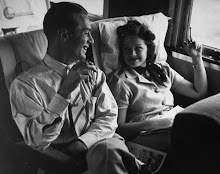
Lisa


Last night I had a dream that Lisa and I were going to drink alcohol and smoke cigarettes besides an old well (the latter detail clearly being the result of watching "Lawrence of Arabia" last night.) I was very excited we are going to do this, in a drinking bourbon in Chuck Kinder's house kind of a way. Meaning, I wanted to do it for the the thrill of drinking and smoking with my former war correspondent academic adviser. In my dream, she understood this, and thought it was silly, but we were going to do it anyhow. Sadly, I think we never got there. My subconscious got sidetracked by alcohol selection and other dream things.

The point of this is, I was sad when I woke up and remembered that Lisa is leaving very soon. She is a true Not Friend. I have known here for two years and taken four classes from her. That's one class every semester I have been at school. I have what they call a friend crush on her. I am platonically smitten with her. She fascinates me in every way, including her perfect little outfits. The kind I strike to have, especially once I have a career. Usually fairly functional, not too girly, good boots, accented with scarves and earrings. Something you could go to a fine dinner or a war in.

I first appreciated Lisa as a character (the idea of her, tall, thin, scarves, Tienanmen Square) and a bad-ass, for all the things she's done. Later, I began to realize what a wonderful person she is, but the latter might not have happened without the former. and It began with her war stories in International Journalism -- Tienanmen Square (for THE events, yes), Jakarta, Beijing, Afghanistan, Iraq... I asked questions, she was annoyingly modest about her interesting life. Eventually she turned into someone whose sense of humor I really liked. And me, with all my school difficulties, all my near-dropping out, and my late, nervous registration, she never lost patience. She never even was 11 feet tall like my old adviser. She just helped me and consoled me and encouraged me. Her personality made me feel better, and the fact of her being on campus tended to make the place seem just a little more exciting -- especially on those days when it feels like routine might just kill me.

Lisa, a true Not Friend, though I wish it were different. She means more to me than any old person on the street. But our relationship does not justify keeping in touch, and her awkwardness makes it unlikely. She has no idea how important she has been to me, and how she has helped. And she'll never quite get it.

All I can do is say, half-joking, that when I am a famous correspondent for Atlantic Monthly in 7 or 15 years, Lisa you must have a drink with me.

Thursday, April 23, 2009

Gentleman


I was walking down the Cloud Factory road in Oakland. It was about five o'clock and busy. I had a low-level kind of a bad day, the kind that isn't bad for any tangible reason, but you there is nothing special in the whole world to spark your interest. I walked down the road, trying not to get run over by the cars. I walked in the dirt and the trash, beside the pokeberries and general weeds. I love that road, because the Cloud Factory is literary and eye-catching and beautiful in its way. And I love that the railroad tracks are right there. Sometimes there are extra cars for coal and I go look at them and think about how I like trains. There's the romantic itch about trains that may not be based in any real world...

I walked by all of this and I felt a little better. Then a boy passed me on a bike. He was skinny and maybe vaguely punkish, but friendly in his dress. I actually can't picture him now, and this happened just a few weeks ago. Nevertheless, I glanced at him, and he looked at me and nodded firmly and politely. It was a sincere nod, but also a business-like, required nod, a gentlemanly nod at a lady as you both travel a muddy, dangerous industrial road. And I felt much better after that nod.

Wednesday, April 22, 2009

Montana Wheat


I feel like I should rewrite this specifically for the blog, but in the meantime, Matt the Farmer is a definite Not Friend. I met him on a trip to Montana with my parents in Summer '07.

2/20/08
We sit high above the endless wheat and Matt wants to know why I think it’s so strange that he’s only 22.

The combine we ride in is a handsome, intimidating machine. It seems to move light and easy, but the long line of teeth that separate and pick up the good parts of the wheat suggest a monster I don’t want to mess with. It might belong to any old farm you pass by, but in the inside cabin where Mom and I squeeze together beside Matt, there is AC and a computer that tells him about bushels and acres.

I don’t know how big this field is, but the road that brought us here is a distant strip. We are lost in wheat and I am delighted. The moment my parents and I stepped out of the farmer’s truck, and found ourselves sweltering under miles of no shade, I felt deliciously out of place. There is nothing more American than farmers but that doesn’t mean the workings of them are anything familiar to me.

Dad rides with the old man, asking questions about how this operation works. The old man looks exactly like an ancient farmer should, stout, strong and white-haired -- even dressed in overalls.

Matt, who might be good-looking somewhere under his ball-cap and sunglasses isn’t quite laconic, but fittingly is no chatterbox. Dependable Mom starts him off with questions about working here at Montana Wheat, and eventually we move to true conversation. There’s something about this man’s North-Western accent that is desperately charming. He seems to enjoy my attempts at witty remark, and I realize with satisfaction that he is one of those people whose laughter is rewarding to cause. He seems charmingly surprised by some of the things I say – so usual that I can’t remember what it was now, but I am glad the novelty here is mutual

I am going to be in love with him for the next few days, like I was with the friendly redheaded girl in the century-old soda-shop in Lewistown. These are people I will never see again and I wish there was something to make us smitten with one another, or at least friends. But our interactions are nothing more than passing interest, not based on any deep connection.

I still halfway regret being here with my parents, squished childishly close to my mother. I wish I was some lone traveler who met Matt in a more spontaneous fashion than my dad’s journalistic curiosity about the wheat business. I wish I was more beautiful and much tougher – like the West.

Everything sounds so easy as Matt controls this monstrous, graceful machine hungrily gathering wheat. He works 15 hours a day at the peak of harvest season. He graduated from college in something scientific and fit for farming. And then there’s his land a few miles from here. He has his own thousand acres for his own crops. The promise of way out West says that a man has to own land. Matt thinks nothing of it, and is politely amused by my incredulousness at his youth.

I’m here with my parents, three days drive from the East. We spend our evenings exhausted from staying indoors, zoned out in front of movies. I’ve come on this family vacation and I am two years younger than Matt. It hurts me to sit in this wheat field and feel so firmly tied to loving apron strings. Because a decade ago, I assumed I would be brilliant, bold, and brave. The moment I turned 18, I would kiss my attachments goodbye, and head in some new direction towards my own life.

Saturday, January 12, 2008

What now?

Well, now I no longer need this blog for school, so what next? I don't feel like abandoning it, and God knows, all the cool kids had addresses that involve blogspot.

I'll keep it, then we'll see if it serves a purpose.

Monday, December 3, 2007

Monologue

The worst is the manager. On the first day he called me “Red” in that way they always do. I told him that that was my brother’s nickname, not mine. My name is Kay, I said. He laughed, and touched me shoulders, and neck. He was looking at my backside. I like them feisty, he said. That’s why Reds are my favorite. I didn’t say a word, because I had only just started. I can’t just quit a job, you understand. I can’t quit when I have just began. I may not have a lot of ambition, but I am stubborn as anything.

Maybe the manager was right about redheads, I don’t know. I only know myself.

I am wretched at this job, I really am. I can’t type fast enough for them. My shorthand is good enough, but I type slow and steady, and that isn’t any good. I can be popular and funny, I can be the life of a party. I don’t know if I can work. I have to work. I am one of the older children, so I have to work now, instead of go to school. Does anybody care about orphans at 22? I’m too old to be an Oliver Twist, object of pity. But I am too young for it to be fair.
Some of the men at the store don’t leer. Maybe red head and freckles isn’t their type. They don’t leer, but they talk down. They talk slowly to me, explaining what I did wrong in the worst sort of kind voices. I think, just because I don’t type fast enough for your liking, doesn’t mean I am slow in the head. I know I am smart. I did well at Pitt in my three years. I laughed, and flirted with boys plenty. Just like before. But I learned a lot of things, interesting things, maybe useful things. If I knew what I wanted to do with them.
I didn’t want to be a teacher or a nurse. I don’t particularly want to be a secretary, but I am good at shorthand. That might be my only money-making talent. I guess you could say I don’t have any ambition. No specific goal for my life. I went to college because father wanted me to. It would have been ungrateful to refuse. Lord knows what else I would have done. Stayed in Welland, I suppose. Maybe gotten a job like this one
I might marry and have children, of course. Never men like these, though. The men at the store don’t deserve me. Even if they cared to have me, they wouldn’t deserve me. I am not a child or a pinup. It’s been a long time since I felt like a human woman. At Pitt and back in Welland, the boys could be pals. We would laugh and flirt, but they could look me in the face.

The worst is the manager. Today he called me Red in that way the always do. Then he patted my backside. I wanted to slap him, but I can’t quite. It’s only been a few weeks. I may not have ambition, but I am stubborn as anything.

Sunday, December 2, 2007

Child soldiers

I haven’t the slightest idea what should be done about child soldiers. Clearly, the worst of it is going on in Africa, and sometimes it seems like the more affluent places try to help Africa, the less it works. Not for any reason except for the assholes in charge, who until they are out of the way, will always be standing between the people who need help. And these are the people who take money and food for the intended recipients. People’s charity is wasted, and they just end up helping the last people they wish they were helping.

Why is this problem important? It’s obvious to anyone who isn’t a sociopath that if 250,000 children are being used as cannon fodder in twenty different countries, it’s a problem. We’re supposed to care when we hear about horrible things happening to people, especially children. It’s in our nature. However, it’s a long way from caring to doing something about it. I haven’t done anything about it, because I don’t know what to do, and because my silly life is a great distraction.

It feels vaguely pertinent that I was watching “Oliver!” earlier today. That’s a shiny version of a book about horrible poverty, and the Charles Dickens grimness is lightened by musical numbers. Still, the theme is one little boy, innocent (to say nothing of the other boys in Fagin’s gang, who have already lost their innocence) who is being pulled back and forth and being exploited by adults. Some of whom were exploited in their own lives, when they were young.
Regardless of political difference and argument, people should feel that there is something fearfully wrong with that. With Dickens days it was poverty, and with these current conflicts in Africa, it’s poverty and warfare. But most of all it’s people who can justify the horrors that they do to other people – smaller, weaker people, who should be protected by them, or at the very least, left alone and in peace.

Wednesday, October 24, 2007

Grandma Kay

Because my Grandma Kay will be 90 years old on December 26, because she’s feisty and sarcastic, and because she majored in Journalism at Pitt but was unable to complete her degree, I think I have the misguided notion of her as a would-be Martha Gellhorn, stifled by family tragedy and obligations. Part of this comes from my bewilderment as to how she ever married my Grandpa Bill. They seem to be polar opposites, and he’d be a hell of a difficult man to get along with. I haven’t the slightest idea about how they really feel towards one another.

For years I had the feeling that Grandma could have done more, and the stupid unenlightened world hindered her. That world, of women being firmly pointed towards the kitchen, is not an illusion. Grandma Kay tells me that she saw it. She remembers her teachers in school, and it dawns on her that they were men, or they were spinster women. Her three years at Pitt, she was taught my only male professors. She tells me this now, and she sounds surprised. She was born in 1917, on another planet, in my mind, but maybe she’s used to my world now. The idea that women had to be single to teach school, would that have been a bizarre thought, if she had stopped to think about it then? Or did something change in her mind, in all the decades since then?
Grandma says there were expectations in the world. Poor women, especially, they knew where they would end up. “Behind a counter at Woolworth’s”, then married, then children. Other women might be nurses, teachers, or…housewives. Of course they could always be housewives.

I don’t know what my Great Grandmother would have expected her daughter Kay to be. She died when Grandma was 12, and I try not to ask too many questions. Terrible age to lose a mother, but I somehow doubt there’s a good age.
As Grandma tells it, her father and older brother decided that she would go to college. She would live with her brother in Pittsburgh. Even a widower with eight children could manage that.
She doesn’t know what she would have done if they hadn’t said she was going to college. She would have stayed in Welland, Ontario and gotten a job, she supposes. It would have been ungrateful to refuse college, certainly. In highschool she was concerned with having fun, boys, popularity, what the other girls were doing… All the things that sound shallow and petty to me now. But they take on a wonderful and impossible quality of story, when I realize that they took place in the middle of the 1930s. Ten million lifetimes away from everything I know, or so it seems to me.

Once when Grandma was married and had most, or all of her children, she took her only daughter to the doctor. The doctor and my Grandma went to Pitt together. He told her, “I always thought you were going to end up being a journalist. How come you never pursued that?” “Because I didn’t have anything to say.” Now she tells me that she still thinks that’s true. He thought she had a talent in that area that she never thought she did.

Grandma did work, for decades of her life. She worked in that utterly stereotypical expected career of women of long ago. She was a secretary. She took a 23 year break between her time as a working woman, but she was always a secretary or an assistant of sorts. The ultimate female career, in the time of almost no female careers. She was not the stifled Martha Gellhorn that I sometimes imagine. But she tells me that she had no ambitions for a career, and maybe that’s true. Still, it was decided for her. Her brother and father sent her to college, and the death of her father made it necessary for her to drop out. The world implied that she could be a teacher, a nurse, a secretary or a housewife. The women who did something else were notable, strange exceptions to this rule.

My Grandma Kay has no notion of what she would have done, if she hadn’t been pushed along by outside forces.